Showing posts with label foodalogue. Show all posts

Wednesday, February 02, 2011

A culinary tour around the world - fourth stop: Japan


いらっしゃいませ! Irasshaimasu!
Welcome and come in!

Okazaki Castle Park

Joan from Foodalogue is taking us to Japan this week. I was very happy about this. Not only do I really really like Japanese cuisine, I am also very fond of Japanese culture and language.

So I would happily like to talk about everything Japanese, like for example the fascinating sumo tournaments:

Sumo tournament Nagoya 2010

and although sumo participents have a very special diet, it is not the purpose of this blog entry to explore their diet in depth;  it  would be be impossible anyway to share everything I have seen in Japan with you. So I will confine myself to Okazaki, for a special reason. First I had my language class there, so I spent several weeks in Okazaki. Second, although Okazaki is not the prettiest town in the country it has everything one expects from Japan. It has a castle:


Okazaki Castle

it has temples


it even has some archaeology, like this long forgotten late Jomon settlement:


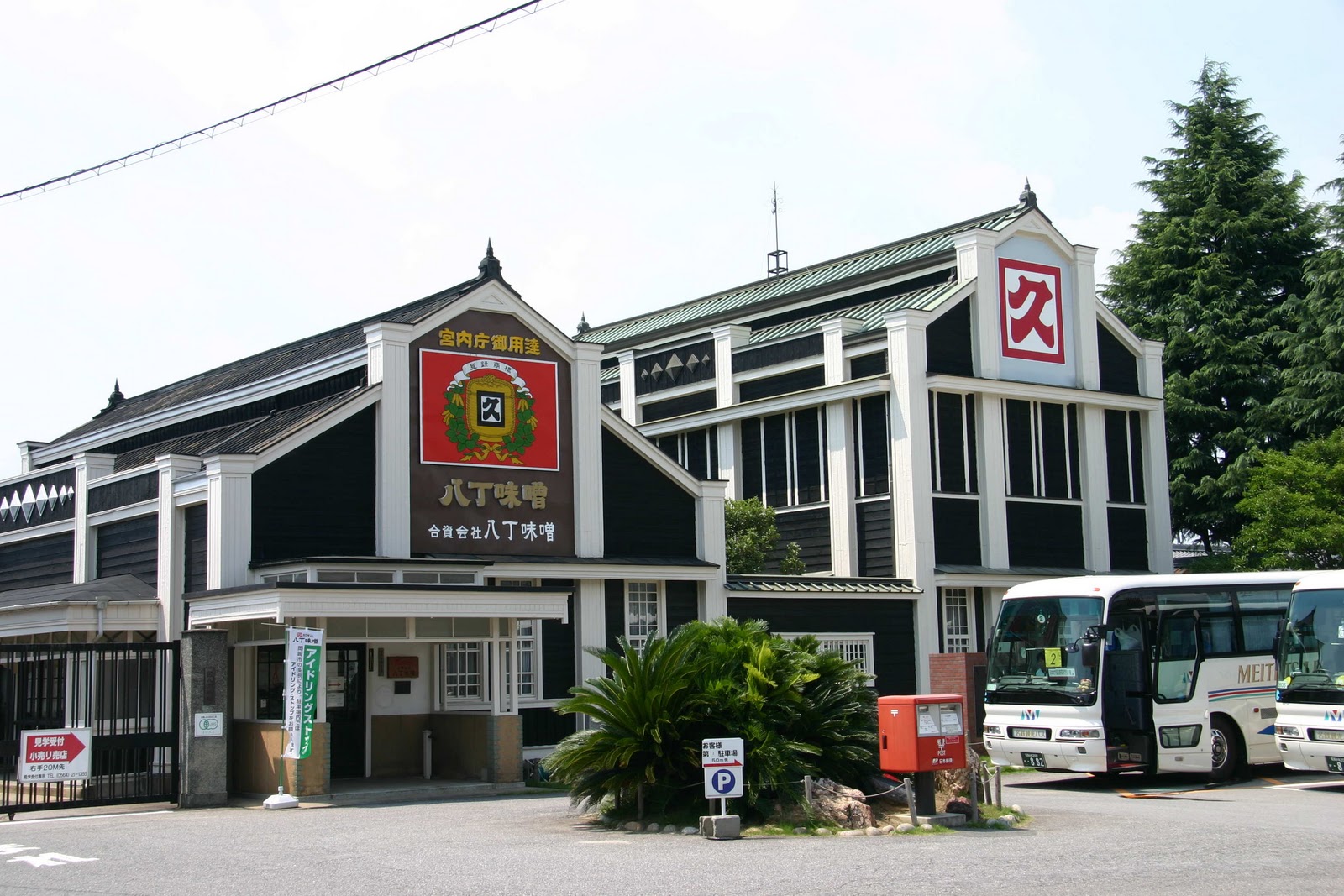
But what makes Okazaki special for this week's challenge is the fact that it is home to the famous red hatcho miso. Hatcho miso -soybeans that are fermented for three winters- is prepared in Hatcho, which means 8th Street, in Okazaki, near the castle. This is Hatcho with its old miso factories:

Okazaki, Hatcho (8th Street)

Of course they have a show factory where you can visit and see how hatcho miso is made:

Hatcho miso show factory


And this is my 'precious': hatcho miso, made in Okazaki, bought in Okazaki but used back home:


Yes, I love my hatcho miso :)

Although I made other dishes (about which I will post next time and give you some super simple and delicious recipes) my entry will be about a very typical winter dish: nabe. Nabe simply means pot and it is indeed a kind of hotpot or stew.

Ideally it looks like this:

from the anime 'Yamato Nadeshiko Shichi Henge'

traditionally it should be cooked on a small cooker on the table and eaten in nice company:


from the anime 'Yamato Nadeshiko Shichi Henge'

and although the nice company wasn't the problem, the table cooker was, so we had to jump between cooking and eating, between kitchen and dining room.

The most time consuming thing is cutting all the veggies:


You then put them into the broth  (mine was a miso soymilk broth) and let it simmer:


Everybody then takes out what he wants to eat, puts it in his bowl and, with some condiments, starts eating:
 
 
Once all the vegetables are gone, you put pre-cooked udon noodles into the broth (I forgot to take a picture, we were too greedy again) and you can feast on the broth-soaked noodles. Yumyum!
 
For desert we had a matcha pudding (recipe from Wagashi Maniac).
 
 
C got creative:
 
And here is the promised recipe for the nabe. It's vaguely based on Zakuro's vague recipe (thank you Zakuro, it was delicious ^-^)
 
豆乳 nabe (soymilk nabe)
 
Ingredients:
 
for the broth:
4 cups of kombu stock
1 cup of soymilk
2 tablespoons of miso paste (I used red hatcho miso)
 
for the veggies:
 
whatever pleases you, I used bean sprouts, lotus root, leek, carrots, enoki mushrooms, daikon, green beans, and white cabbage
 
for the noodles:
 
same here, use your favourite ones, I used udon noodles
 
What to do:
 
combine stock, miso, and soymilk and bring to a simmer. Add the veggies in small arranged piles and let simmer till soft. Everybody is supposed to take out his portion and then put fresh veggies into the broth until everything is used up. While the noodles are soaking up the last broth, serve the veggies with ponzu, grated daikon and chili oil. Enjoy!


Amatou from Wagashi Maniac gave me permission to translate and post her yummie matcha pudding recipe (本当にありがとう!) :

Matcha Pudding

450 ml ( a bit under 2 US cups) unsweetened soymilk
10 g (3 teaspoons) kudzu (a starch made from the roots of Pueraria lobata, a kind of pea)
3 g (1 teaspoon) kanten (agar) flakes
50 g (1/4 cup) caster sugar 
1-2 tablespoons matcha powder
1/2 vanilla pod
2 tablespoons matcha syrup
2 tablespoons macha licquer
berries (blueberries or other berries of your choice)
2 tablespoons Kuromame ama-ni (black sweetened soy beans)

Use 3 tablespoons of soymilk to dissolve the kudzu powder. Slowly heat the rest of the soymilk together with the cut up vanilla pod and the agar flakes for about 5 minutes.The agar should be completely dissolved. Bring to the boil and add the kudzu-milk mixture. Stir until it thickens, then reduce heat.

Mix the matcha powder and the sugar and add in two to three steps to the hot pudding. If desired add some licquer and syrup.

You can pour the pudding through a sieve to filter out vanilla grains and small lumps of kudzu or agar (I didn't, love all my vanilla grains in the pudding *hehe*)

Rinse 4 small ramekins with cold water and pour in the pudding. Let cool over night, or at least a couple of hours at a cool place.

Before serving mix the matcha syrup and licquer and drizzle over the pudding. Serve with berries and kuromame.

I didn't have matcha syrup and licquer (although you can quite easily make them yourself as Amatou demonstrates on her blog - I definitely have to try this). Instead  I simmered blueberries with a lemon wedge and some brown sugar and used them instead of the licquer and the kuromame.


Wednesday, January 26, 2011

A culinary tour around the world - third stop: Turkey


So, Joan from Foodalogue is taking us to Turkey this week. As you can imagine, I'm very happy about this stop. She already posted a lovely vegetarian recipe, Imam Bayildi (literally: the imam fainted), go and have a look at it.

I have been to Turkey once, but this has been ages ago and the dishes I can remember are baklava because it was devastatingly sweet, sickly sweet tea and spinach börek which I just loved. There isn't much else; maybe the police razzia into which we ran because some Turkish guy took us to an illustrous night club made me forget profane things like eating. We were young we didn't need to eat ...
Turkey actually became much more meaningful to me during my later studies at uni. Turkey, being part of the 'Fertile Crescent', is home to many of our domesticated plants. The early domesticates were genetically most similar to wild plants from the Karacadağ region of southeast Turkey. The location for domesticating einkorn for example is placed in this area. Single origins for both tetraploid wheat and barley are also suggested, with wheat definitely from the Karacadağ area, too (Öskan et al. 2002).
Wild einkorn wheat in the Karacadag mountain range
B. Kilian et al.fig. 6. In: M. Glaubrecht (ed.) Evolution in Action 2010, 137-66.


Lev-Yadun et al. 2000


The 'Fertile Crescent'  was not only the origin of einkorn, wheat, emmer, and barley but also of lentils, peas, flax, and chickpeas. Sedentary hunter-gatherers in sites like Hallan Çemi or Çayönü of course also ate wild animals and early domesticated pigs but they intensively used the fore-runners of our cultivated grains and pulses. Finds of querns and handstones, mortars and pestles, suggest an avid use of grasses, pulses, and nuts (esp. almonds).

Before I venture into the origin of religion in this area I want to come back to the reason of this blog post, the coulinary journey to modernTurkey. OK, just one last picture from the famous site of Göbekli Tepe, the mother of all religion, also called the 'Garden Eden'. Look at this impressive monolith, it's 10,000 years old!


Schmidt 2006, fig. 59

Well, where were we? Ah yes, Turkish cuisine ....
I wanted to keep up the spirit of the late hunter-gatherers in ancient Turkey and look for it in modern Turkish cuisine, so it had to be something with wheat and pulses, lots of pulses, because I love lentils and co.

In the end I choose to make some spinach börek, red lentil and bulgur patties, and a green lentil salad (yes, I know, it was a lentil overkill - did I mention that I loooove lentils?)


The börek were based on a recipe from a German site called Turkish Recipes. Since you might not want to read a German recipe and I veganised the filling anyhow, I give you the recipe here:

Spinach börek


Ingredients:
1 packet frozen spinach leaves (ca. 300 g), thawed and pressed to remove the water
half a block of tofu (200g) (or use vegetarian feta cheese, instead of lemon marinated tofu)
lemon juice from half a lemon
1 small onion
2 cloves of garlic
herb salt, black pepper, paprika
olive oil for frying
1-2 tablespoons of tomato paste
Italian parsley
8 Yufka pastry sheets (I couldn't get them, so I used vegan phyllo pastry)

What to do

Marinate the crumbled tofu in lemonjuice and herb salt. Meanwhile finely chop the onion and garlic clove. Heat oil and fry onion and garlic until transparent, add the spinach and fry for a couple of minutes. Add the tofu crumbles, fry again. Add tomato paste, seasoning and parsley. This will be the filling.
Put the filliing in the centre of the pastry sheet, moisten the edge of sheets and press together.
Heat Olive oil in frying pan and fry the börek on both sides
Can be eaten warm and cold.

Since yufka pastry doesn't contain fat it is nice to fry in the pan, it was a little on the fatty side with the phyllo. Next time I would bake them in the oven if I can't get yufka.

The green lentil salad (Mercimek Piyazi) came from Chili and Ciabatta.


Petra from Chili and Ciabatta permitted to translate and post her recipe, so here it is:

Green lentil salad (Mercimek Piyazi)

Ingredients:

1 cup green lentils, soaked for a couple of hours
1 bunch of green onions, chopped
2 tomatoes, finely diced
2 cloves of garlic, pressed
1 bunch of flat leave parsley
some twigs of mint
1 and 1/2 teaspoon cumin
1 teaspoon  paprika (the hot one, Turkish or Hungarian one, if you can't find it use 1/2 a teaspoon cayenne pepper)
4 tablespoons live oil
2 tablespoons white wine vinegar
2 tablespoons lemon juice
salt, black pepper

What to do:

Cook lentils in roughly 1.5 l of water for about 15-30 min until tender. Do try them now and then, you wouldn't want to get them mushy. Strain lentils and put in a big bowl. Add all the other ingredients and mix up well. Let rest for half an hour to let the flavour develop.
Serve with pide bread and if you are not vegan you can fry halloumi cheese, that's what Petra did.


And, last but not least the red lentil and bulgur patties are from misstr.com:


In the end, I added some wonderful blogs about Turkish food to my rss feeds and have lots of recipes and ideas which I will try after this journey. Thank you, Joan, for taking us on this tour and I can't wait to see the round-up. See you in Japan then :)

Tuesday, January 18, 2011

A culinary tour around the world - second stop: Alaska


photo from Ervin Skalamera's awesome Alaska gallery:
http://www.ervinskalameraphotos.com/

 Did I complain about Panamanian food? I must have been a bit muzzy. How could I, with all the beans and maize and tomatoes and all kind of veggies. Alaska on the other hand is a vegan's nightmare. I looked up the index in a cooking book on amazon.com called 'Cooking Alaskan' and I found interesting things like skinning, dressing, and cooking beaver....yeah, well....nope not for me...recipes with salmon, halibut, crabs, moose roast, squirrel fricassee, pickled beaver tail, and lynx steak....again, nope not quite what I want on my plate. Not that I don't like the animals, they are beautiful and awesome .... to watch, but not to eat. Look at them, aren't they majestic and just too wonderful to hunt down and slaughter? How could I ever eat such beauty?

http://skolaiimages.com/journal/wp-content/uploads/2009/09/_jul4576.jpg

At last I thought maybe a desert, so I looked up Diaxsh  icecream and the Agutuk desert. I don't want to deprive you of their recipes. First the Diaxsh iceream:

"Mix some of the second fall of snow with melted or heated ooligan grease. Beat it up with the hands until it fluffs. Add a bit of sugar to your taste. Pour some blueberries over this and you have Tsimpshean ice cream. This can be frozen and saved for the summer."
So ooligan grease makes it typical Alaskan? What the heck is ooligan grease?? 

Some google time later I found this: 'Ooligan grease is made from a small smelt-like fish that's rich in monounsaturated fat'. Well, a desert doesn't have to be healthy, so monounsaturated fats are survivable, but fish in my ice cream? Thanks, but no thanks, wasabi ice cream is already weird enough for me.

Then just make the Agatuk desert, I thought to myself.


I didn't have to finish reading the recipe, both are btw from Raven's Ruff Stuff And Other Things Native.
"Agutuk or Akutaq or ackutuk or Eskimo ice cream in the past always began with tallow from big game and seal oil as the base for whipping various kinds of berries into a fluffy dessert."

Alaska suddenly became the most undesirable place in the world. Not that I don't like Alaska, maybe I don't like the politics coming from there and the food, but all the rest....just look at the landscape, what is there not to love:

http://www.wildnatureimages.com/3000%20to%2010000/C6CT6046..jpg
And, probably the most important thing (for me at least) is the absolutely fantastic archaeology. Think only of the recently discovered beautifully preserved artefacts one can find nowadays thanks to Global Warming like this arrowshaft complete with sinew:

Dixon et al. n.d., fig. 6 http://www.nps.gov/akso/akparkscience/climatechange/dixon.pdf

Or all the problems linked to the migration of the first people into the Americas! We still are not sure when exactly and on which routes America was peopled.

Araujo et al. 2008, fig. 1
Mitochondrial DNA analyses differ as to when and what route it happened. According to some Siberian ancestors who came via Beringia was the only DNA input (Nelson et al. 2008) and to others their were different inputs which happened at different migrating events (Volodko et al. 2008). Investigation of parasitic worms in humans suggested rather coastal routes and, since tropical parasites were present in prehistoric humans, a water route from Asia is very likely (Araujo et al. 2008). A similar study looking at the bacteria Heliobacter pylori which lives in our stomach showed that Southamerican Indians had the South-Asian strain of this bacterium, not the Eurasian one (Yamaoka 2009). Also looking at the artefacts leaves us enough puzzles to keep some generations of archaeologists busy. If the only route to America was via Beringia, clovis artefacts from Alaska should be the oldest. However, artefacts from the Alaskan Mesa site or the newly discovered Beringia site Serpentine Hot Springs only showed younger points so far. The oldest one actually being from Mesoamerica and Southamerica (Waters et al. 2007).


But let me go back to the kitchen before I blissfully drown in early American prehistory.


What did I do in the end? I actually found a completely vegan drink, an easily veganizable salad and desert and a -with some effort- a veganizable main dish.


  • Main dish: Alaska salmon tofu with horseradish, walnuts and herbs
  • Salad: Alaska cole slaw
  • Desert: Blueberry buckle
  • Drink:  Alaska tea
You see, no Palin-names in my recipes, someone else had dips on them *hehe*


To imitate the fishy marine flavour I soaked the tofu in lemon juice and wakame algae:


and here the end result, a totally tasty dish, the sauce alone was worth making this recipe (adapted from a recipe from alaskafood.org)


Alaska Tofu with Horseradish, Walnuts, and Herbs


1 block of Tofu (ca. 500 g)
lemon juice from 1 lemon for marinating
wakame for marinating
cornstarch
olive oil for frying
horseradish sauce (I made a oat milk bechamel and added grated horseradish)
1/3 cup chopped walnuts
1 tablespoon each fresh chives, parsley and tarragon
1 tablespoon good margarine
salt, freshly ground black pepper


Put tofu between a dish towel or kitchen paper and gently squeeze out water. Cut tofu into slices and marinate for a couple of hourse with lemon juice and wakame. Pat dry and turn in cornstarch, then fry in olive oil until tofu becomes a bit crisp.
Meanwhile make a white roux and add horseradish (about 2 -3 inch piece), walnuts, herbs and margarine. Season with salt and pepper. Remove tofu from pan and spread mixture evenly over the tofu fillets.
You can roast it in the oven for a about 5 minutes, but I didn't, it was delicious without this step.

Glenda posted the recipe for an Alaska coleslaw on this webpage and she ate it at a goldmine camp in Alaska, so it has to be authentic. Look at the recipe from that forum. The only difference was that I used fresh cranberries (since I had the opportunity), left out the honey, and used a vegan mayonnaise obviously. For my taste the fresh cranberries were a bit tart, but my husband and son loved them.


The desert was a blueberry buckle. The recipe was based on a recipe from Vegetarian Times. Super yummie, too. This is a photo before it is put in the oven, so you can see the ultimate cinnamon streusel on top of the cake:


and this is after baking, it didn't last long:


The only truely vegan Alaskan recipe, however, was the Alaskan tea. No fish-fats involved and a really recommandable winter drink. You can find the original recipe here.


Alaska Tea

1 cup of dried cranberries
1 cinnamon stick
4 cups of water
juice from 1/2 lemon
juice from 1 orange
1 tablespoon of suger or to taste

Heat up the dried cranberries and the cinnamon stick in the water and let soak for about an hour. Strain and add the lemon and orange juice and the sugar. Reheat until the sugar is completely dissolved. Serve hot.

Makes 4 cups.


I leave you here, and will see you all back in Turkey next week.


Tuesday, January 11, 2011

A culinary tour around the world - first stop: Panama

A short intermezzo if you will excuse me. I wanted to take part in the 'culinary tour around the world' (http://foodalogue.com/2010/12/culinary-tour-2011-•-the-itinerary.html) although I guess I am already a little late. However, since it was one of my New Year's resolutions to take part in a food challenge and I already made the dish I'll post it anyway. The challenge is to create or adapt a dish from one country each week and blog about it (well, you should rather go to the webpage in case you would like to know more about it).
Panama, as nearly all Latinamerican countries are a real challenge for me, because their diet is heavily based on meat. I remember the placard in Argentina saying 'Meat for All'. The situation was further aggrevated by the fact that I have never been in Panama and therefore never tasted original Panamanesian Panamian food from Panama.
I wanted a vegan main dish which would easily fit into my daily meal plans, without offending my vegan taste nor my omni husband's. After heavy googling I decided to veganise 'Tamale de Olla', a kind of polenta in a pot.

I basically used this recipe http://www.world-recipes.info/panama-panamanian/tamal-de-olla.html but marinated tofu with vegan Worcestershire sauce and white wine instead of the chicken. you have to fry the tofu for some time to get it all crusty and yummie. Annato seeds are not available here, so I added a bit of safran. And maybe I used a bit more chili than in the recipe, but I like it hot...

And here is the result:


different from Italian polenta style dishes and very very tasty. A complete meal with a nice green salad: